 EN
EN

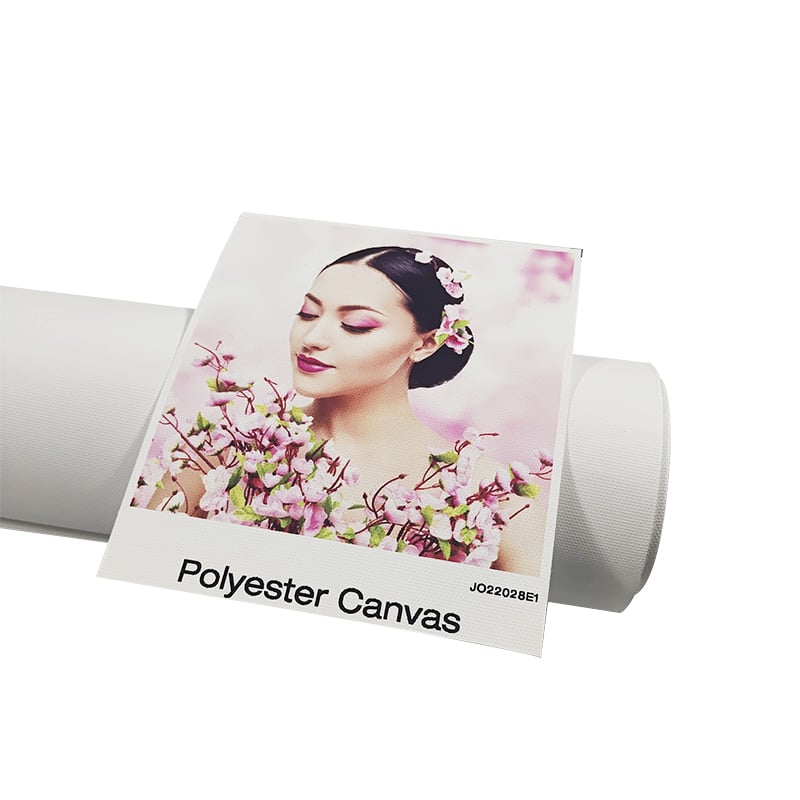
When commercial print studios and art reproduction businesses need a reliable substrate for large-scale output, polyester canvas consistently emerges as the material of choice. Its combination of structural stability, ink compatibility, and repeatable surface quality makes polyester canvas an indispensable foundation for anyone producing art prints at volume. Understanding exactly why polyester canvas holds this position helps procurement managers and print professionals make smarter, more cost-effective decisions.
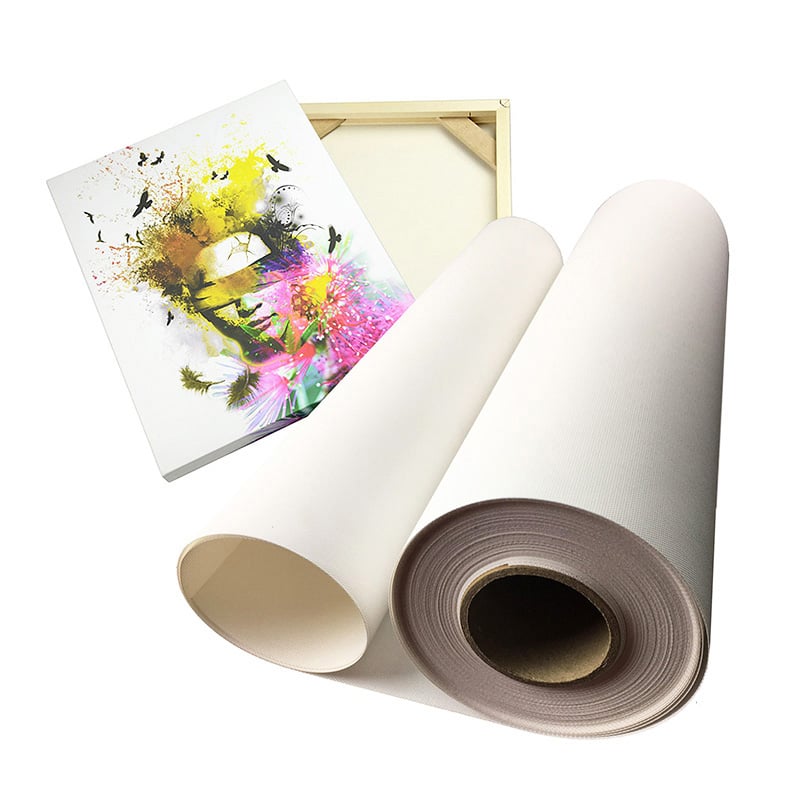
High-volume commercial art printing demands a substrate that performs consistently across thousands of print runs without introducing variation or degradation. Polyester canvas meets this demand with precision. Unlike natural-fiber alternatives, polyester canvas resists moisture absorption, maintains dimensional stability under heat and pressure, and delivers uniform ink adhesion from the first sheet to the last. These properties are not incidental — they are engineered into polyester canvas to serve exactly the pressures of commercial production environments.
The Structural Advantages of Polyester Canvas in Commercial Production
Dimensional Stability Under High-Speed Print Conditions
One of the most critical requirements in high-volume art printing is that the substrate does not stretch, warp, or shrink between print passes. Polyester canvas excels here because polyester fibers have an inherently low elongation rate compared to cotton or linen. When polyester canvas moves through wide-format inkjet or UV printing systems at speed, it maintains its original dimensions without the tension fluctuations that cause misregistration or color banding. This stability translates directly into fewer reprints, less waste, and more reliable output at scale.
Commercial studios operating multiple printers simultaneously depend on polyester canvas to deliver consistent substrate behavior across every machine. Because polyester canvas responds predictably to heat from drying lamps and curing systems, operators can set profiles once and trust those settings across large production batches. This predictability is a measurable competitive advantage when fulfilling orders of hundreds or thousands of prints within tight delivery windows.
Resistance to Environmental Stress During Storage and Shipping
Polyester canvas is significantly more resistant to humidity and temperature variation than cotton canvas. In commercial settings, finished prints are often rolled, stacked, or stored in warehouses before distribution. Polyester canvas does not absorb ambient moisture the way natural fibers do, which means prints retain their flatness and dimensional accuracy throughout storage. When polyester canvas prints arrive at galleries, retailers, or end customers, they unroll cleanly and hang without the waviness or cockling that can affect less stable substrates.
Ink Performance and Color Fidelity on Polyester Canvas
Superior Ink Adhesion for Vivid, Long-Lasting Results
Color accuracy is non-negotiable in commercial art reproduction. Polyester canvas is manufactured with surface coatings specifically engineered to anchor pigment-based and dye-based inks with high precision. The coating layer on polyester canvas controls ink spread, dot gain, and absorption rate to produce sharp detail, vibrant color gamut, and smooth tonal gradients. For art prints that must faithfully reproduce original paintings or digital artworks, polyester canvas provides the surface fidelity that professional buyers and galleries demand.
Polyester canvas also performs exceptionally well with UV-curable inks, which are increasingly common in high-volume commercial print operations due to their fast cure times and durability. The polyester substrate bonds effectively with UV inks without the delamination risk that can appear on less compatible materials. As a result, polyester canvas prints withstand handling, framing, stretching, and long-term display without the ink layer cracking or peeling.
Consistent Coating Quality Across Production Batches
Industrial-grade polyester canvas is produced with tight manufacturing tolerances, which means the coating weight, surface texture, and whiteness index remain consistent from roll to roll. For commercial print buyers who source polyester canvas in large quantities, this batch consistency eliminates the need for constant ICC profile recalibration. A print produced on polyester canvas in January should match a reprint ordered in July without requiring new test prints or color adjustments. This reliability reduces labor overhead and protects profit margins on repeat orders.
Cost Efficiency and Scalability of Polyester Canvas for Art Prints
Lower Waste Rates Through Reliable Substrate Performance
In any high-volume print operation, substrate waste is a direct cost driver. Polyester canvas minimizes waste because its consistent surface and dimensional stability reduce print defects caused by substrate variation. When a studio switches to polyester canvas, operators typically report fewer jams, fewer color mismatches, and fewer rejected prints compared to lower-quality or inconsistent substrates. Even a modest reduction in waste rate across thousands of prints per month translates into significant material savings and improved throughput.
Polyester canvas also has a longer shelf life in raw form than many natural-fiber canvases. Because polyester canvas does not deteriorate rapidly when stored in standard warehouse conditions, buyers can purchase polyester canvas in bulk without the risk of material degradation before use. Bulk purchasing of polyester canvas further reduces unit costs and simplifies supply chain management for studios with high and predictable print volumes.
Versatility Across Print Technologies and Finishing Options
Polyester canvas is compatible with a wide range of commercial print technologies, including latex, aqueous, and UV inkjet systems. This cross-platform compatibility means a single grade of polyester canvas can serve multiple production lines within the same facility. After printing, polyester canvas accepts lamination, varnishing, and stretching without losing structural integrity. Whether the finished product is a gallery-wrapped canvas, a rolled fine-art print, or a framed reproduction, polyester canvas supports every finishing pathway that commercial art print businesses rely on.
FAQ
Is polyester canvas suitable for reproducing fine art with high color accuracy?
Yes. Polyester canvas with a precision ink-receptive coating delivers excellent color accuracy, sharp detail reproduction, and wide color gamut, making it a strong choice for faithful fine-art reproduction in commercial settings.
How does polyester canvas compare to cotton canvas for long print runs?
Polyester canvas offers superior dimensional stability, lower moisture absorption, and more consistent batch quality compared to cotton canvas, which makes polyester canvas more reliable and cost-efficient for long, high-volume print runs.
Can polyester canvas be used with UV inkjet printing systems?
Yes. Polyester canvas bonds effectively with UV-curable inks, providing strong adhesion, fast cure compatibility, and resistance to cracking or peeling, which is why polyester canvas is widely adopted in UV-based commercial art print production.